Conquering the Galaxy

Introducing the Twilight’s Fall Mode from Thunder’s Edge

#TI4

Galactic civilization has collapsed.

In a dark, alternate future, the once-great powers have all fallen to ruin. Standing atop their corpses are the mad Mahact Kings, each of them warring against the others for ultimate supremacy. As their wild gene-sorcery tears the universe apart at its seams, only one will eventually emerge victorious, though they will ultimately rule over nothing but ashes.

Back when we first revealed Tunder’s Edge—the upcoming new expansion for Twilight Imperium Fourth Edition—we teased Twilight’s Fall, a massive, brand-new game mode that is included in that expansion. Today, it’s finally time to fully reveal Twilight’s Fall and the unique twist it provides to Twilight Imperium gameplay. Strap in, there’s a lot to cover here—so much so that it’s almost an entirely new game!


Mad Kings of Conquest

Deep down at its core, Twilight’s Fall still plays like the Twilight Imperium you know and love: the round structure is the same, the phases are (mostly) the same, and the kinds of actions you take are the same. However, there are a lot of differences that set this mode apart from the standard mode, and they all primarily lie within the “factions” you play.


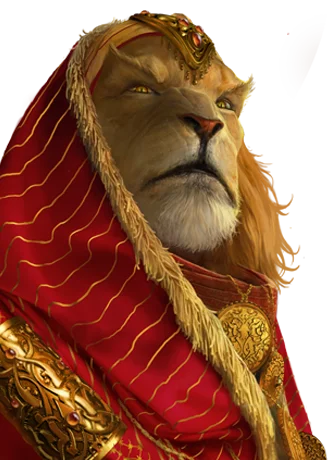
Rather than taking command of a full-fledged faction, you instead assume the role of one of eight mad Mahact Kings. Each King has a unique flagship, mech, and commodity value, but aside from that, they have no inherent abilities of their own. Instead, during setup, each player drafts a starting suite of powers from an assortment of ability cards, unit upgrade cards, and genome cards. The abilities of many of these cards will seem awfully familiar to longtime fans of the game, often bearing the names and effects of the abilities belonging to the normal factions of Twilight Imperium—after all, the Mahact are gene-sorcerers, so why wouldn’t they take the best traits from the conquered for themselves?

You start the game with two ability cards, one unit upgrade card, and one genome card, all of which you chose during the initial draft. You can also gain more from “splicing” during the game itself, which can be initiated through Twilight’s Fall’s unique strategy cards (we’ll go over those in a bit). By mixing and matching these cards throughout the game, you build your own unique, custom faction from the ground up, ensuring that your domination of the galaxy is unlike any other.

Now, let’s take a look at what these three types of cards entail.


First up are the ability cards. In Twilight’s Fall, there is no researching of technology; after all, why would the Mahact bother with “research” when they can just take what they want straight from the source? Instead, we have the ability cards, which not only allow you to copy the effects of various faction-specific technologies from the standard game, but also let you copy factions’ innate abilities! For example, the Mitosis ability works very similarly to the Arborec’s ability of the same name, letting you gain a steady stream of infantry the longer the game goes on. Likewise, the Federation of Sol’s Versatile ability can also be appropriated, giving you access to more command tokens to fuel your conquest.

In a normal game, you would have to meet the prerequisites in order to research a faction-specific technology. In Twilight’s Fall, however, you can simply grab that same technology as an ability card during a splice, potentially letting you snag something like the Hacan’s Quantum Datahub Node or the Ral Nel Consortium’s Nanomachines fairly early in the game. While not every ability from every faction is present—these are being torn from the scraps left behind by those factions’ destruction, after all—there are still over 80 of these ability cards in total, leaving you with plenty of options to build your own unique galactic tyrant.


Next up are the unit upgrade cards. Like the ability cards, each of these upgrades thematically originates from the various factions of the standard game mode. However, instead of directly translating existing abilities for Mahact use, many of these unit upgrade cards are more “inspired” by their associated factions rather than direct copies. For example, the Ahk Syl Fier is an upgraded cruiser that draws from Creuss technology, while the University War Sun provides a glimpse into what a Jol-Nar superweapon would look like. Of course, for many of the factions that did have their own versions of specific units, those are also accessible, such as the Titans’ Hel-Titan or the Naalu’s Hybrid Crystal Fighter . With so many different upgrades to splice onto your units, you can craft a one-of-a-kind, unique custom fleet to conquer the galaxy—just keep in mind that your opponents can do the same!


The third type of card you can splice are genome cards, each of which can be exhausted for some sort of benefit once per round. For example, the Human Genome allows you to temporarily boost the combat prowess of a ground force, the Diplomatic Genome lets you ready a planet, and the Courier Genome can grab you (and another player) an extra action card. Each of these cards has roughly the same level of power as an agent from the standard game mode, but while you won’t find any commander-equivalent cards in Twilight’s Fall, you can have multiple genomes under your control, giving you access to a personal cadre of “leaders” to help you bend the galaxy to your will.

Now that you know what you can splice, it’s time to go over how you splice. However, in order to do that, we first need to talk strategy.


Tactical Tyranny

As we mentioned earlier, Twilight’s Fall uses its own set of strategy cards, titled (in numerical order): Lux, Noctis, Tyrannus, Civitas, Amicus, Calamitas, Magus, and Aeterna. Some of these are 1-to-1 recreations of strategy cards from the standard game mode; for example, the Lux strategy card is identical in abilities and effects to the Leadership strategy from the standard mode, while Amicus works exactly the same as Trade. Others provide slight tweaks to existing cards, such as Civitas granting slightly more flexibility than its standard mode counterpart, Construction.

Finally, there are the cards Noctis, Calamitas, and Magus, each of which allow you to initiate a splice for genomes, unit upgrades, and abilities respectively. Each splice involves a certain number of players, and when you initiate a splice, you draw and reveal a number of cards of the indicated type equal to the number of participating players plus one. You then pick one to keep and pass the rest on, and this continues until each participating player has chosen a card to splice (the rest go back to their decks). While the process is simple, the possibilities it opens up are anything but, and you’ll definitely want to splice as much as possible to build the mightiest tyrant the galaxy has ever seen.


Speaking of tyrants, Twilight Imperium veterans may have noticed that the Tyrannus strategy card—the Twilight’s Fall analogue to Politics—eschews any mention of the agenda deck, and instead references a “tyrant” and a “benediction token.” That’s because there is no agenda phase in Twilight’s Fall; instead, it is replaced by the “benediction phase,” which is directed exclusively by the current “tyrant.” If you have the benediction token, you are the tyrant, which means during the benediction phase, you get to draw three edict cards and choose one to resolve. These all have useful and impactful effects, such as Bless allowing you to gain several resources, Splice initiating a splice of any type, and Execute halving the infantry on up to three enemy planets at once. Having total control of which edict gets played is certainly appealing, but keep in mind that you must give up the speaker token if you want to be the tyrant, which means another player will get first dibs on choosing their strategy cards the next round—and they’re sure to remember the edicts you declared during your tyrannical reign!


Finally, we have the paradigms. These are powerful, single-use abilities that take the place of the hero cards from the standard game mode. Unlike hero cards, you don’t unlock paradigms from scoring three objectives; instead, you gain these from the primary ability of the Aeterna strategy card, which means you could potentially have multiple paradigms throughout the course of a single game. This could allow you perform some bombastic combos unique to Twilight’s Fall, such as utilizing Overgrowth to instantly produce a large number of units and then Changing the Ways to swap the system of those units closer to an enemy. Alternatively, you could try Awakening a planet with a technology specialty and then use Devour World to gain a dizzying amount of trade goods from that planet. These wild, climactic combinations perfectly encapsulate the untamed gene-sorcery of the mad Mahact Kings in their unending drive for conquest, and that’s only scratching the surface of what can happen during Twilight’s Fall!


A Dark Future

Any longtime fan of Twilight Imperium will want give Twilight’s Fall a try. By splicing myriad abilities from the galaxy’s fallen factions, this mode offers an experience unlike anything the game has had before. Wield the power of a tyrannical King in Twilight’s Fall when Thunder’s Edge arrives in October!


Written by Peter Schumacher

Back to all news